Become an
On-Call firefighter
Are you over 18 and work or live within five minutes of our fire stations?
Then we may have an exciting career opportunity for you as an On-Call firefighter where you can earn between £6,000 and £8,000 a year, sometimes more.
24 of our fire stations have an On-Call fire engine, which is crewed by a dedicated team of women and men who are aged 18+, who work and/or live in their local communities and respond to emergency calls whenever they are needed.
We are always looking to recruit enthusiastic applicants from all walks of life. The most important qualifications are common sense, compassion, commitment, discretion and teamwork. We are particularly keen to hear from you if you can be available during daytime working hours.
The first stage is to use our Online Postcode Checker to find out if your work or home location is within five minutes of the station you wish to apply for. If your post code is eligible you will automatically be given the option to fill in an expression of interest form.
Applied? What happens next?
Thank you for applying. A member of our team will give you a call to invite you to an Awareness Session. At your Awareness Session you will learn about our 12 week recruitment process.
If successful at all stages, you will then be part of Hereford and Worcester Fire and Rescue team, and you will start your firefighter training.
On-Call Firefighter Recruitment Process

1. Postcode Checker

2. Awareness Session

3. Application

4. Written Tests
Numeracy and / or literacy, if needed

5. Interview

6. National Firefighter Selection Test

7. Fitness Test

8. Medicals

9. Social media screening, DBS, Right to Work and Reference checks

8. Successful? Congratulations – you will start your Firefighter training!

Flexible and fulfilling
We offer a range of contracts, where the number of hours and times to be available can vary to suit your personal and professional circumstances. You won’t spend all this time working; it’s just the time you’re available for us to call you if there is an incident. You will also be providing a vital service to your local community in many challenging situations.
Full training, uniform and personal development is provided and there are many opportunities to gain additional skills and qualifications that will be of use outside the Fire Service.
Fitness, strength and training
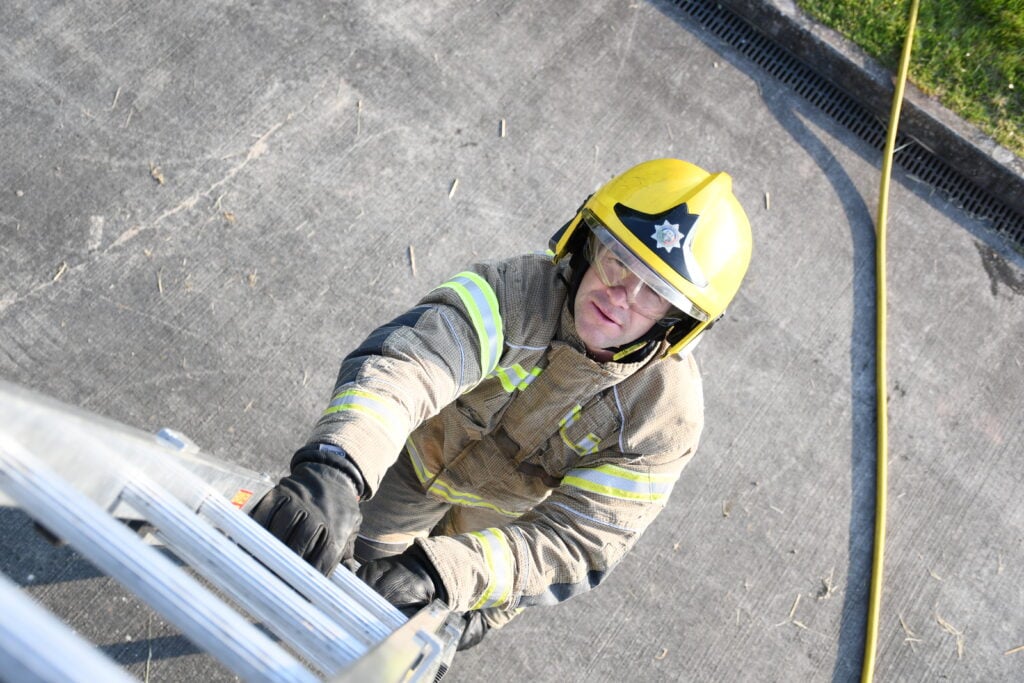
The recruitment process to become an On-Call firefighter involves the successful completion of the National Firefighter Selection Tests. To help you prepare for the tests we offer a structured fitness programme for you to follow.
On-Call firefighters receive the same training and use the same equipment as Wholetime crew, it is therefore essential that you meet the same fitness requirements as Wholetime Firefighters. You will also need to attend a weekly training session, usually held on a weekday evening at your fire station.
On-Call Firefighter FAQs
You will find answers to the most common questions about the role of an On-Call firefighter, including fitness requirements, qualifications, training, career progression, pay and conditions.
If you have further questions about the role or the recruitment process, we recommend that you attend one of our On-Call Awareness Sessions. These are held at various locations and you will be able to chat to serving On-Call firefighters and On-Call Support Officers about the role and the process in greater detail.
On-Call firefighter crew stories
Take a look at the ‘crew stories’ of some of our On-Call firefighters, read about how they achieve their work/home balance, and what being an On-Call firefighter means to them.
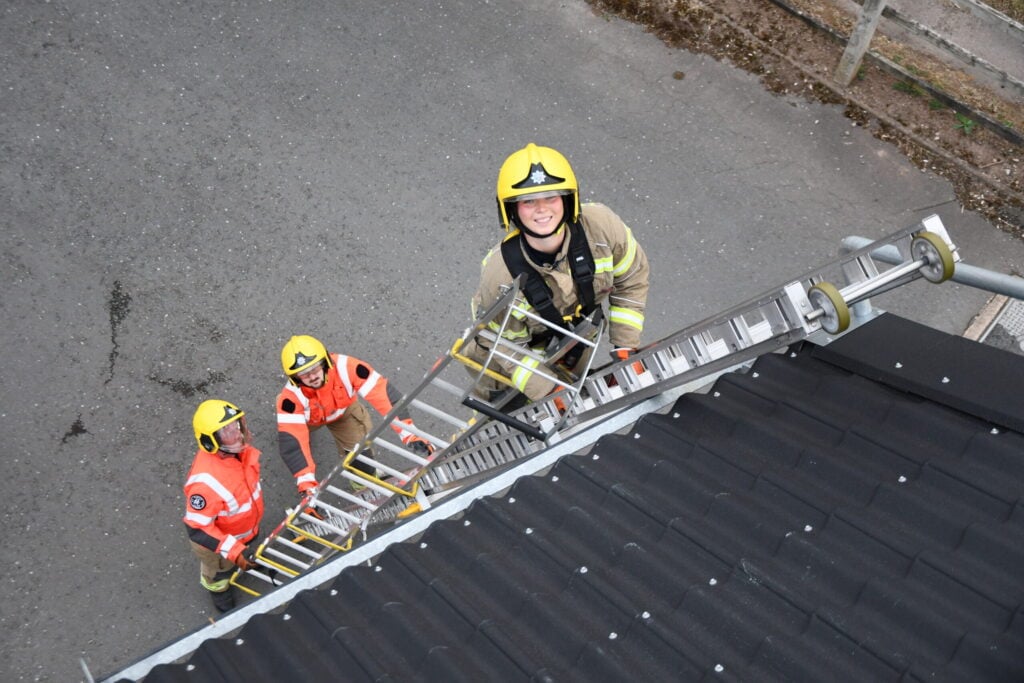
Firefighter Hennessy Gardner-Vine, Ross on Wye
Hennessy attended a careers evening during sixth form, and from that day knew that she was interested in a career in the military or the emergency services. Although she initially applied to be a paramedic, she was still considering firefighting, so came along to a Tuesday evening Ross on Wye Fire Station drill night, and then kept coming back to watch the drills for six months! Hennessy had always wanted to have a career where she would be caring for others, and as soon as she met the crew and experienced a drill night, she knew that this was the way forward.
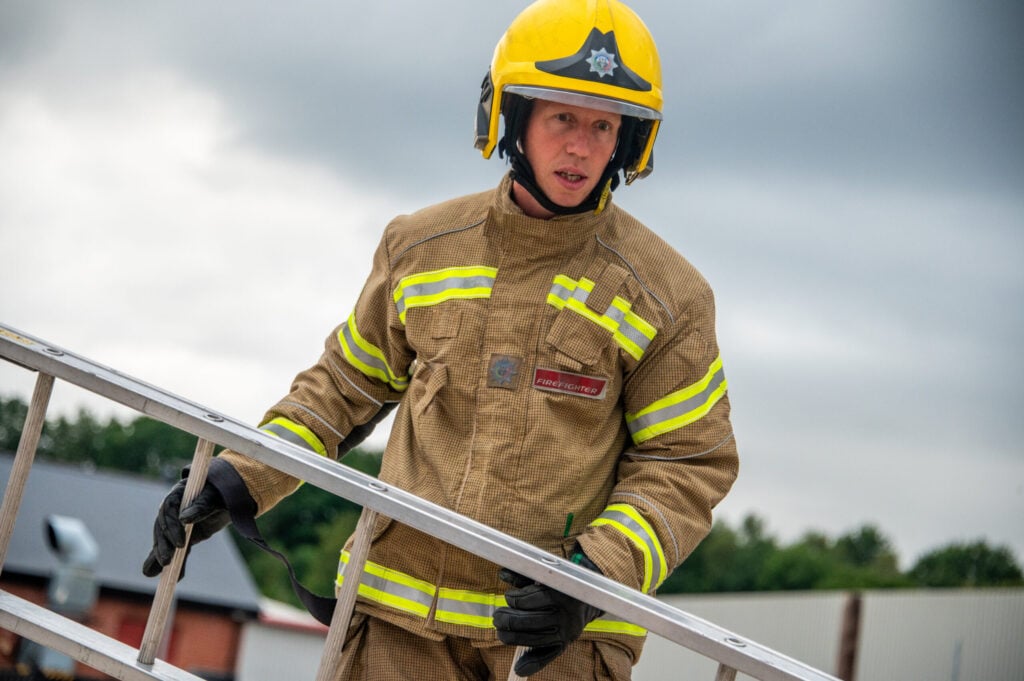
Firefighter Russell Godfrey, Wyre Forest
Russ had always really liked the idea of being a firefighter but didn’t pursue it. In 2020, he opened a fitness studio five minutes from the fire station and it was an ideal opportunity to become an On-Call firefighter.
He has a 40 hour contract, which allows him to be flexible with both work and family commitments, such as doing the school run in the afternoons. The classes understand when they sign up, that if Russ’s alerter goes off, he will be leaving immediately and will need to rearrange or continue afterwards depending on the incident. His clients are very supportive of his role as On-Call firefighter.
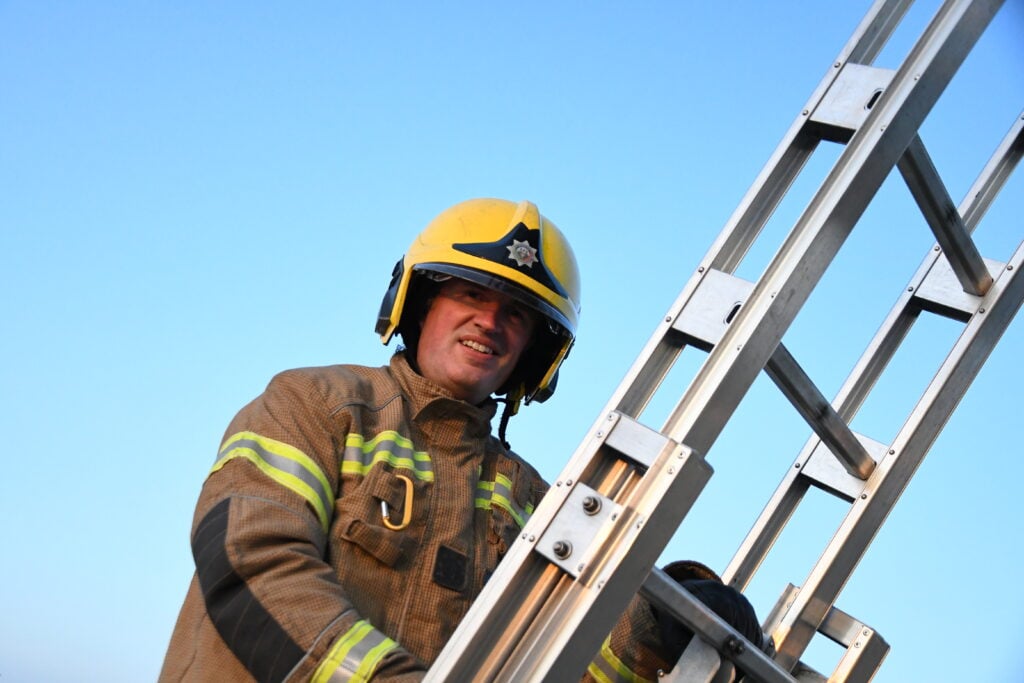
Firefighter Tim Hood, Pebworth
Tim moved to Honeybourne in 2018, and met the Watch Commander from Pebworth Fire Station, who suggested coming along to an On-Call firefighter taster session in the evening. It was something Tim had considered before but circumstances hadn’t previously worked out.
Tim’s full-time job during the day is an Aftersales Manager for a leading agricultural machinery supplier. He provides night and weekend cover for the Fire Station.
Neurodiverse? Thinking about becoming an On-Call firefighter?
As part of Hereford and Worcester Fire and Rescue Service’s commitment to neurodiversity, a range of different support is available to candidates. Starting from the application stage and continuing throughout your career with us. Find out about the support two of our Firefighters have received:
Firefighter Charlie Cray
Firefighter Lukas Lange
On-Call firefighter FAQs
On average, an On-Call firefighter can earn from £6,000 to £8,000 a year. We offer a range of contracts between 40 and 120 hours cover a week for which you will be paid a retaining fee. A firefighter in development receives £4,558 and this increases to £5,832 once you become a fully qualified ‘competent’ firefighter, which takes up to three years.
In addition to this fee, you will also be paid £13.87 an hour for attending incidents and training, again which rises to £17.75 an hour when you become a competent Firefighter.
There is no set distance, but when on call you need to be able to get to the station within five minutes from your home or place of work. When responding to the station, On-Call staff must comply with speed limits and traffic regulations, so this must be considered when assessing the time.
As part of the On‑Call Firefighter recruitment process, candidates are required to demonstrate competency in Maths and English. This is usually evidenced by providing scans of your GCSE Maths and English certificates at grade C/4 or above as part of your application. Equivalent qualifications, such as Functional Skills Level 2, may also be accepted however these will be reviewed by HR on a case‑by‑case basis when your application is received.
If you did not obtain these in school or have since lost evidence of your grades, you will be required to complete a numeracy and / or a literacy test. Support and guidance will be made available to all applicants who require it at this stage of the process. Our aim is to ensure that you feel fully prepared should you need to undertake the written tests.
To note: the recruitment process also includes a fitness test, a medical and an interview.
At the point of application you will be asked if you have any reasonable adjustments you would like to be considered to support you during the application or recruitment and selection process.
If you answer yes, a HR Officer will contact you to discuss your individual needs and to discuss what reasonable adjustments the service may be able to put in place to support you.
Please note: not having an official diagnosis or report does not exclude you from having reasonable adjustments.
If you feel you may benefit from adjustments of any kind, please answer yes to this question. We will take into account relevant information, such as evidence of a referral, past adjustments or a description of how you are affected.
Being a firefighter is a physical job, so it’s important to be reasonably fit and we ask for an average level of fitness that most people can reach. If you take part in sport on a regular basis or have an active lifestyle this is usually sufficient. Applicants will be provided with a fitness guide as part of the application pack to help them prepare and reach the required standard.
All trainee firefighters undergo a training programme of an initial three weeks when they start employment and then three remaining modules over an 18-month period. In the future we may be able to provide some of the three weeks initial training in a variety of flexible ways. You must also be available to attend the weekly three-hourly training sessions at your station.
This is the period when you are in the training and development phase of your role, up to a maximum period of three years in accordance with your terms and conditions of employment. During your probationary period you will be required to demonstrate a satisfactory level of performance.
Promotion opportunities are open to On-Call firefighters once you have qualified to be a competent firefighter. You can apply to become a Crew Commander and then a Watch Commander.
The nature of the role means we can offer flexible working arrangements to fit individual needs and commitments, such as childcare. We normally require a minimum of 40 hours on-call cover a week, although the more hours you provide (up to 120 hours per week), the more flexibility there is as to when those hours are provided. On-Call firefighters also have an annual leave entitlement. You will be expected to attend regular training sessions for three hours a week and to be available for a reasonable amount of call outs. We are particularly keen to hear from you if you can be available during daytime working hours.
When you are on call there are no restrictions on what you do or where you go, but you must ensure you carry your pager (or ‘alerter’) and be within the five-minute response time. Of course, you cannot drink alcohol while on call or take any other substance that impairs your ability to attend incidents when required.