Nightclubs & Performance Fire Safety
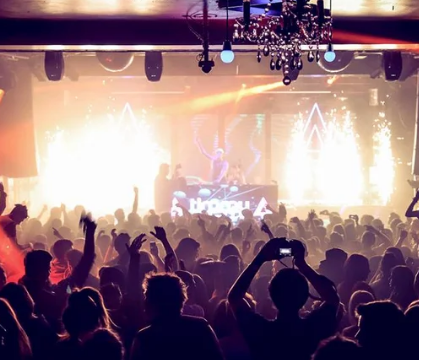
The use of pyrotechnics indoors presents a significant fire risk and has been the cause of many tragedies within nightclubs and other performance venues, most recently in Crans-Montana, Switzerland. Make sure that the venue and activities within it are safe from the devastating effects of fire.
Fire Safety at Venues and Nightclubs
Whether you plan to hold a small performance in a village hall, organise a band playing in a bar, or a running a larger nightclub, HWFRS are urging all organisers, managers and nightclub owners, staff and customers to remain vigilant especially when it comes to the use of pyrotechnics. As a consequence of the Macedonian nightclub fire in 2025 where 63 people sadly lost their lives and over 200 people were injured, HWFRS Fire Safety Inspecting officers have conducted Fire Safety Audits in Nightclubs across Herefordshire and Worcestershire in 2025 reminding them of their fire safety duties and we plan to continue this work in 2026.
Advice for Owners of venues and organisers
It is vital that you understand your legal responsibilities under The Regulatory Reform ( Fire Safety ) Order 2005
Make sure you have an up to date Fire Risk Assessment: A formal Fire Risk Assessment should be completed by a trained and competent person help you identify fire risks (sources of ignition, fuel, people at risk, numbers of guests and staff) and ensure you have adequate measures in place, as required by law, such as the correct levels of Automatic Fire Detection, Emergency Lighting and signage.
Escape Routes: Make sure you have Fire exits which are sufficient in number, width, and clearly marked, leading directly to safety
Emergency Planning and Staff Training : Develop a clear emergency plan for all staff, detailing evacuation procedures/ routes, assembly points, and roles, and practice it with regular fire drills
Accessibility: Ensure plans and routes accommodate people with disabilities or restricted movement.
Electrical Safety: Regularly test and maintain electrical systems and equipment to prevent faults.
Say no to indoor sparklers: While they may look festive and attractive, sparklers and indoor pyrotechnics reach extreme temperatures and can ignite flammable decorations or ceilings in seconds. Any pyrotechnic displays should be professional operated by qualified and competent organisations, with the appropriate fire risk assessment in place.
Advice for Staff
Means of Escape: Keep all fire exits and escape routes clear of obstructions (furniture, clutter) at all times.
Training and fire drills: Ensure you take part in Fire Safety training and Fire drills provided by your employer, so you know what the procedures are in the event an Emergency
If you see exits blocked, areas of concern, or dangerous use of pyrotechnics, report it to the venue management immediately.
Advice for Customers
Customers are advised that when you go out, take a moment to identify your nearest exits. If you see exits blocked, areas of concern, or dangerous use of pyrotechnics no matter how small, report it to the venue management immediately.
In an emergency, get out, stay out, and call 999
History tragically keeps repeating itself – a timeline of tragic major nightclub fires sparked by fireworks/indoor pyrotechnics
1. The Station, West Warwick, Rhode Island, USA
Date: 20 February 2003
Cause: Pyrotechnics set off by the band ignited acoustic insulation foam near the stage
Casualties: 100 deaths, ~230 injured
Details: Flames spread rapidly throughout the club; exits were inadequate, and no sprinklers were present.
2. República Cromañón, Buenos Aires, Argentina
Date: 30 December 2004
Cause: Indoor fireworks (a flare) ignited ceiling and foam decorations
Casualties: 194 dead, ~1,492 injured
Details: Overcrowded (~4,000 people vs. 1,500 capacity); multiple exits locked; victims died from fire and toxic smoke.
3. Lame Horse, Perm, Russia
Date: 5 December 2009
Cause: Indoor fireworks ignited a plastic ceiling with decorative branches
Casualties: 156 killed
Source: Listed among worst pyrotechnic-related nightclub fires.
4. Santika Club, Bangkok, Thailand
Date: 1 January 2009
Cause: Indoor fireworks display post-New Year’s ignition of soundproofing materials
Casualties: At least 64–67 dead
Details: Victims suffered burns, smoke inhalation, and crush injuries.
5. Kiss Nightclub, Santa Maria, Brazil
Date: 27 January 2013
Cause: Pyrotechnic flare used during performance ignited acoustic foam
Casualties: 242 killed, ≥630 injured
Details: Single exit; power failure worsened evacuation; largely smoke inhalation.
6. Colectiv, Bucharest, Romania
Date: ±30 October 2015
Cause: Band’s pyrotechnics ignited ceiling foam
Casualties: 64 killed, ~190 injured
Reactors: Recognized as one of the deadliest recent pyrotechnic-triggered fires.
7. Pulse Club, Kočani, North Macedonia
Date: March 2025
Cause: Indoor pyrotechnic flame ignited the ceiling
Casualties: 63 killed, >200 injured
Details: Rapid fire spread within seconds; stampede followed.
8. Le Constellation, Crans-Montana, Switzerland
Date: 1 January 2026
Cause: Champagne bottle sparkler (indoor sparklers) struck ceiling, causing flashover
Casualties: ~40 dead, 115 injured
Details: Wooden ceiling, narrow exits led to high casualties.
Common Themes Across Incidents
Indoor pyrotechnics (fireworks, sparklers, flares) igniting flammable materials
Overcrowded venues lacking proper exits
Combustible décor/foam facilitating rapid fire spread
Severe throttle due to smoke and panic-induced stampedes
These events underscore the recurring hazard posed by fireworks and pyrotechnics in enclosed entertainment venues.